

5 Steps to Your 5-Year Career Plan
What you will find in this blog:
- Benefits of a five-year plan
- 5 Steps to Your 5-Year Career Plan
- Step 1: Take stock of where you are
- Step 2: Imagine the future
- Step 3: Set your goals
- Step 4: Make plans
- Step 5: Monitor your progress (and adjust when needed)
- Take five
Where do you see yourself in five years?
It seems like a simple question, but it is surprising how many people cannot give an answer. It can be a daunting task to think that far out, particularly if you are unsure of your career path.
However, creating a five-year plan can be useful for plotting your career and simply having one can make you more employable.
Here are some benefits of having a five-year career plan:
- Provides direction and motivation for the future.
- Strengthens confidence in decision-making and taking more active roles within your company.
- Promotes organization and leads to accountability.
- Increases the chance you will advocate for yourself and your goals since you have a defined direction.
- Fosters skill development and a willingness to prepare for the future.
- Boosts employability since those with five-year plans are generally more proactive about training, seizing leadership opportunities, and adapting to industry changes.
That all sounds good, right? So, here is how you create your own five-year plan.
5 steps to your 5-year career plan
Step 1: Take stock of where you are
To figure out where you want to go, you first must assess where you are. This means identifying your current job title and job responsibilities, mapping out your skill set and experience, and pinpointing personal strengths and areas of opportunity.
Step 2: Imagine the future
Now that you know where you are, where do you want to be? What is your dream job? What kind of lifestyle and work life balance do you want? What are the salary, benefits, and other career mandatories you have? What type of work environment helps you thrive? What are your passions and motivations? What kind of job would make you happiest? What is your motivation to get up and go to work in the morning?
You get the idea. In a perfect world, where would you want to be in your career?
Step 3: Set your goals
Now that you have identified where you want to be, set goals to help you get there. For example, this could be taking an online certification course, or stepping up into a management role for a new project. You might need to do some research on your dream job before you can set your goals. Indeed suggests making sure that your goals are SMART.
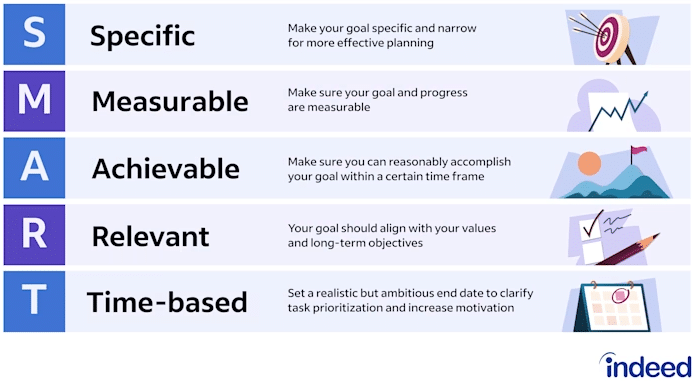
Image credit: Indeed
Step 4: Make plans
Now that you have your SMART goals, how are you going to reach them? Think through any training, resources, or mentorship and support you might need. Break down what you must do and then assign those items into a corresponding year of your five-year plan.
For example, before you can manage a project, you might need a specific project management certification. Completing that training program could be your first-year goal. Then managing a project would be in year two.
The important thing to recognize is that this will not all take place immediately. The whole point is that it is a long-term plan. Keep your expectations in check, be realistic, and try to anticipate any obstacles that might come your way.
Step 5: Monitor your progress (and adjust when needed)
Once you have implemented your first SMART goals and an action plan to accomplish them, keep track of your progress. Try to check in with yourself every few months. You do not want a whole year to go by and realize you have not reached that year’s goal.
Get feedback from managers or mentors on your progress, particularly if you are already at your dream company. Having your managers know what you are working toward will help you get even further and put you on their radar for opportunities.
Finally, be flexible enough to adjust your plan if needed. Challenges and life in general can come out of nowhere. Be sure to give yourself grace and reset if you miss a goal. Do not give up, just reevaluate your timeline or goal and keep moving forward.
Take five
Having a five-year plan is not a must, but it is a worthwhile endeavor. The benefits of having a five-year plan are significant, and you will be more likely to succeed in your career with one than without one. By following these five steps, you can make the most of your five-year plan and craft the career path of your dreams.
Want a five-year plan but not sure how to start? Connect with me to discuss how career counseling can help you develop a five-year plan that is both ambitious and realistic, steering your career toward the future you imagine.